
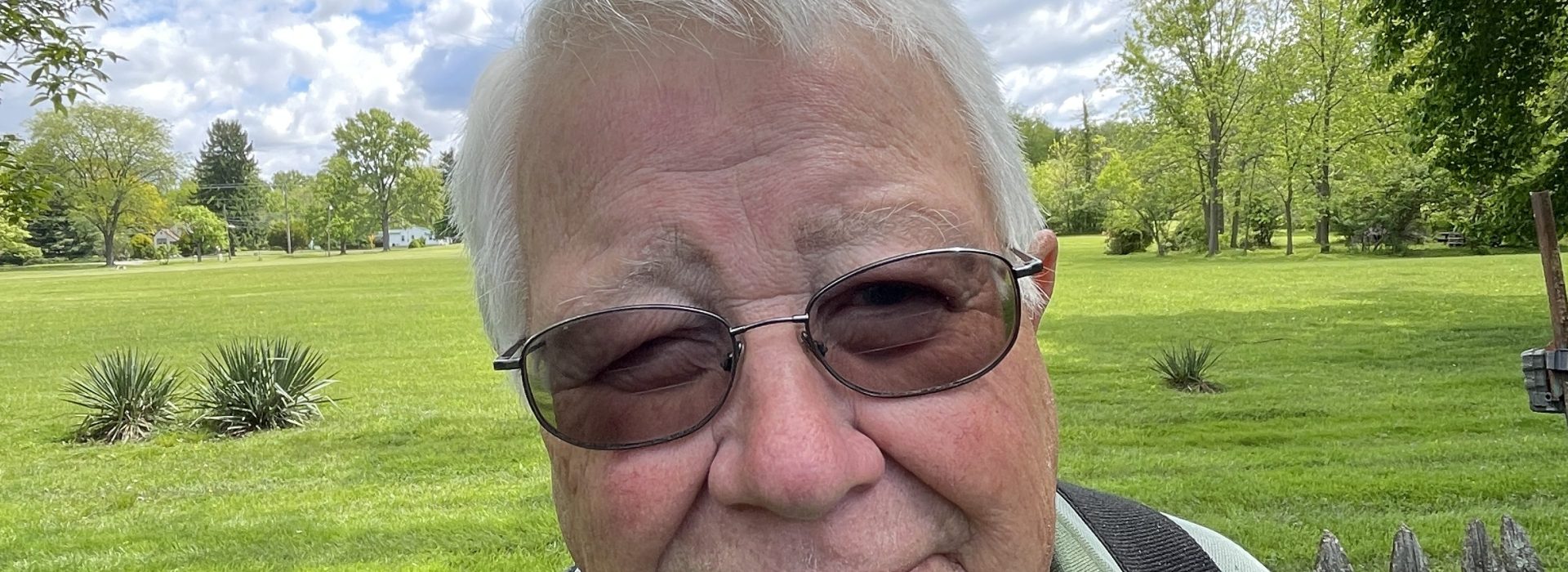

Kingsmill golfers enjoy lush, striped fairways and smooth greens shaped by decades of care and innovation. For longtime turf mower Bill Swihart, helping maintain the course became a second career — one that perfectly complemented his first passion: music.
Bill spent his professional life as band director at Marion City Schools, teaching and conducting students for more than three decades. But after hours, he craved physical activity and time outdoors. Music unexpectedly opened that door.
While directing community concert bands in the 1970s, Bill – who plays alto sax and clarinet – met and formed a friendship with Kingsmill course superintendent Greg Lauer, himself a tuba player in a band. Conversations after rehearsals eventually led to an invitation to help at the golf course, and in 1976, Bill joined the maintenance team.
His first job was changing hole locations each morning, a necessity during the era of metal spikes. “The greens looked like elephants had walked across them,” he laughs. When a mower left for another job, Bill stepped into fairway mowing, working sunrise-to- sunset summer days and rushing from school to the course during the academic year.
The work itself has changed dramatically over time.
When Bill began, fairways were cut using aging tractors pulling seven-gang reel mowers, while wooded areas and pond banks were trimmed with a simple 20-inch push mower — one that didn’t even propel itself. Today’s modern hydraulic reel units and zero-turn mowers can cover more ground faster while producing a cleaner, more consistent cut. What once required days of labor is now accomplished in hours, allowing the Kingsmill crew to focus more attention on conditioning and detail work golfers notice immediately.
Swihart notes other innovations, too. Advances in turf management — from the use of growth regulators to targeted fertilizer and fungicide applications — have made healthier playing conditions possible throughout the season. And adoption of plastic spikes eliminated much of the damage done to greens and the need to cut new holes each day.
Despite all the technological progress on the course, Bill still sees a familiar connection between his two careers.
“There’s a rhythm to mowing,” he says. “You’re watching patterns, listening to the machines, keeping everything working and consistent — it’s just like conducting a band.”
Today’s Kingsmill golfers enjoy the course in its finest condition yet, the fruits of hard work, innovation, and dedication by Bill and others.