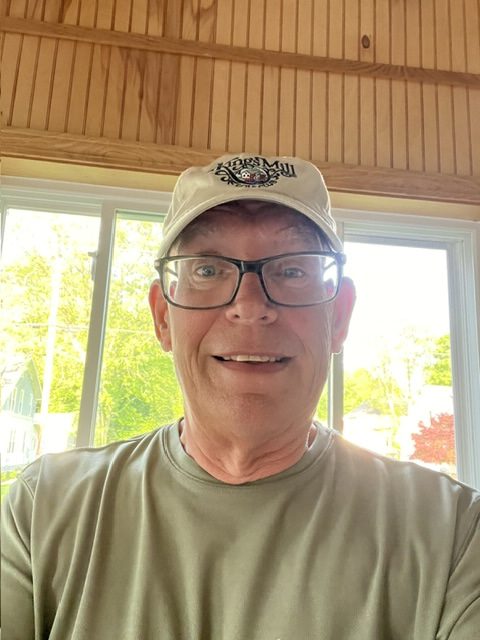
-For Greg Lauer, being Kings Mill Golf Course’s first golf course superintendent was never just a job — it was a lifetime shaped by early mornings, hard work, and deep pride in building a course from the ground up.
Lauer’s story at Kings Mill began in 1966, when he was barely a teenager. Riding his bicycle 11 miles from Prospect with his brother, he helped his father water tees and greens for two dollars a night — paid, he remembers fondly, in crisp $2 bills. Soon he was mowing greens, learning equipment, and discovering a passion that would define the next five decades of his life.
At the time, Kings Mill consisted of only nine holes. Lauer later was deeply involved in building the back nine, which opened in the early 1970s. The work was demanding and hands-on. Crews cleared hundreds of trees, gathered thousands of rocks by hand, installed irrigation lines, and seeded fairways themselves. Lauer helped grow in the new holes from bare earth to playable turf — an accomplishment he still considers one of the most rewarding moments of his career.
“That was very rewarding. It took years. And you know things just kept coming one right after another, a new type of job,” Lauer recalls.
In 1973, after a year studying agronomy at The Ohio State University, owner John Russell Sr. offered him the superintendent position. Lauer accepted, beginning what would become a 54-year career managing every aspect of the course.
He quickly learned that superintendent work went far beyond mowing grass. The role required expertise in irrigation systems, turf science, equipment mechanics, staff leadership, and environmental problem-solving. From battling flood damage along the Olentangy River to transitioning from metal spikes to soft spikes — a change that dramatically improved green conditions — Lauer experienced the evolution of modern golf course management firsthand.
Under his leadership, Kings Mill operated with small but dedicated crews, many made up of students working their first jobs. Mentoring young employees became one of his greatest sources of pride. “You had to start people the right way,” he said, believing the lessons learned on the course carried into life beyond it.
After retiring in 2021, Lauer often reflects on quiet evenings walking the course he helped build. Seeing healthy greens, mature fairways, and golfers enjoying the landscape brought a simple satisfaction: the knowledge that decades of unseen work had shaped something lasting.
“It was fun, hard work,” he says. “I loved the people, just loved a lot of the members. So I just kept going, learning everything I could and finished my career there.”